It wasn’t all about birds today. Thought you’d enjoy joining us for the whole adventure.
~ Paul and Julie
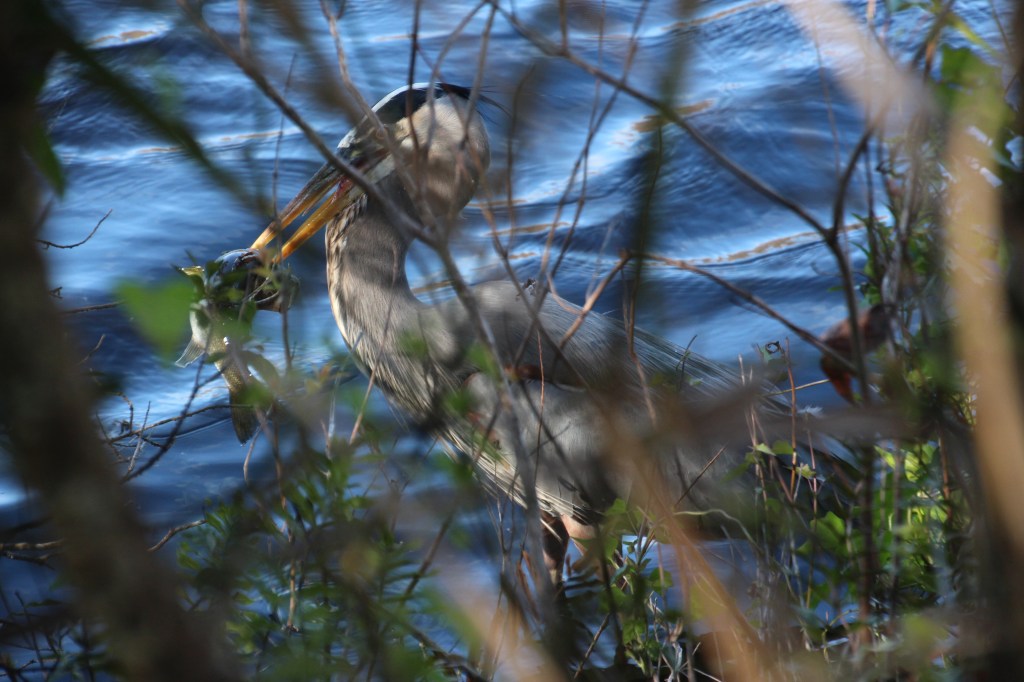
Didn’t see him initially, but heard a big splash. Vegetation partially obscures this Great Blue Heron. Look closely and you can see what he’s having for lunch…
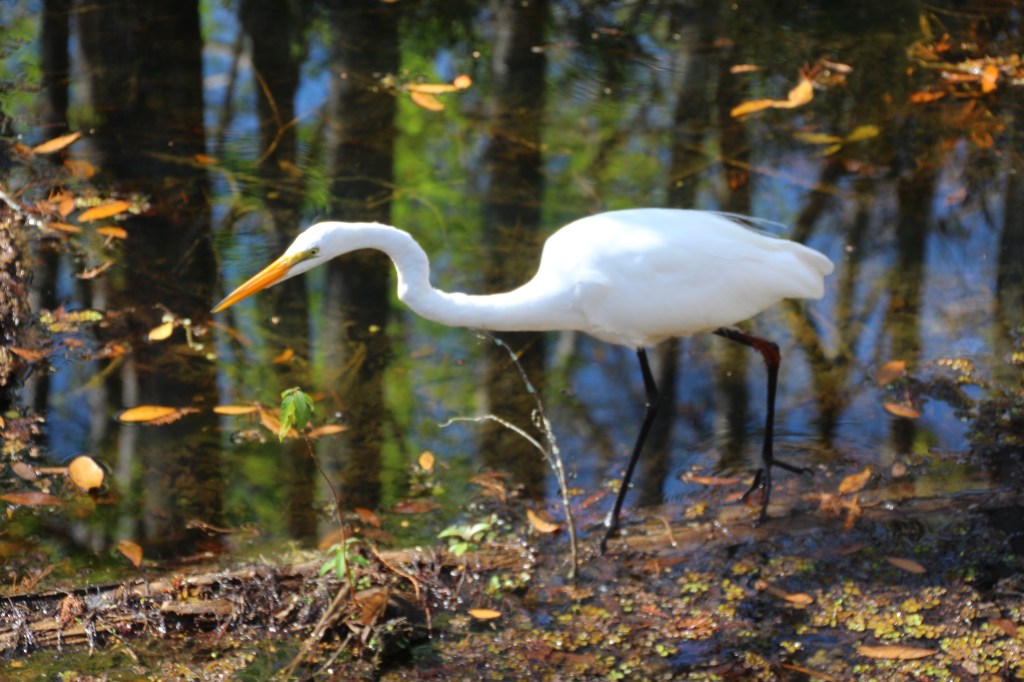
Another Great White Heron. Commonplace in these parts. Tree nests in colonies close to water.

Anhinga, or “snake bird”. The origin of the name is apparent when swimming: only the head and neck appears above the water so the bird looks like a snake ready to strike. The anhinga does not have waterproof feathers so feathers get soaked upon immersion in water. Their dense bones and wetted plumage allows them to fully submerge and search for underwater prey. The anhinga can’t fly with wet wings. In the picture below, you can see the anhinga standing with wings fanned open to dry its feathers and absorb heat from the sun. After a few minutes in the warm Florida sun, it can once again fly…
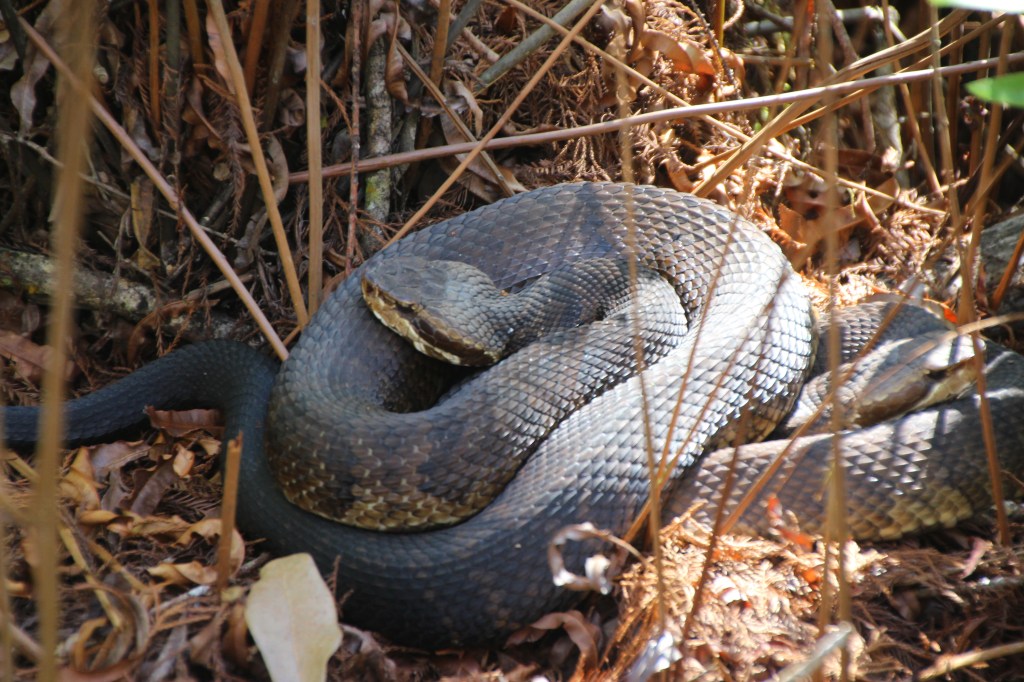
Another inhabitant of the Slough – the Cottonmouth (Water Moccasin). One of 21 venomous snakes in the US. It can deliver a painful and potentially fatal bite! Look closely and you can actually see two of these pit vipers!!

Any walk through the slough wouldn’t be complete without spotting one of these guys…


Paul and Julie,
The Anhinga was my favourite bird when we visited Biscayne Bay NP and Everglades NP in March 2019 just after our lovely visit with you in Fort Myers. It was amazing to see them DRYING their wings. What a weird evolutionary strategy !! – Lynn
LikeLike
Wow wow wow, so much wildlife! I’m curious to know if someone pointed out the snakes or if you were the only lucky ones to see them! Poor Anhingas having to be so patient! – Blair
LikeLike